Heat Pumps Are Cool, But How Do They Work?
Heat Pumps Are Cool… But How Do They Work?
Heat pumps are having a moment, and for good reason. As more homeowners and building owners look for ways to improve comfort, reduce greenhouse gas emissions, and modernize aging HVAC equipment, heat pumps are becoming one of the most talked-about solutions in building efficiency.
But despite the growing popularity, many people still ask the same question:
What exactly is a heat pump, and how does it work?
Unlike a traditional gas furnace or boiler that creates heat by burning fossil fuels, a heat pump works by moving heat from one place to another. In the winter, it extracts heat from outdoor air and brings it inside. In the summer, it reverses direction and removes heat from your home to keep indoor spaces cool.
It works similarly to a refrigerator, just on a much larger scale.
Heat Pumps Don’t “Create” Heat
The name “heat pump” comes from the system’s ability to pump heat rather than generate it directly. Even when outdoor temperatures feel cold, there is still heat energy present in the air. A heat pump captures that energy and transfers it indoors.
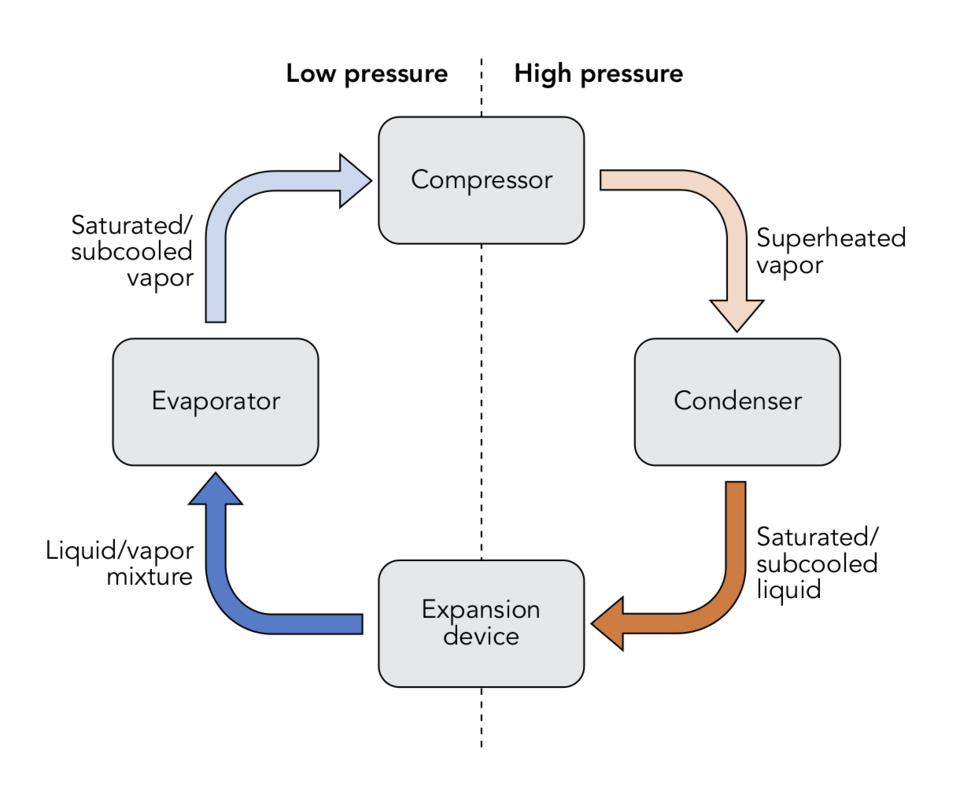
This process is possible because heat pumps use a refrigeration cycle based on phase changes and pressure changes in the refrigerant.
At the core of the system are four key physical principles:
- When a liquid is heated to its boiling point, it turns into a vapor.
- When gas is compressed, its temperature increases due to pressure.
- When vapor cools below its boiling point, it condenses back into liquid.
- When a liquid expands, its temperature decreases as pressure drops.
These principles allow heat pumps to efficiently transfer heat between indoor and outdoor environments.
Understanding the Refrigeration Cycle
A heat pump system continuously circulates refrigerant through four primary components:
- Evaporator
- Compressor
- Condenser
- Expansion valve
The refrigerant absorbs heat in one location, changes phase, becomes compressed, releases heat elsewhere, and then repeats the cycle. The refrigeration cycle diagram in the guide illustrates how the refrigerant moves between low- and high-pressure states throughout the system.
One of the most important features of a heat pump is that the cycle can operate in either direction. That means the system can provide both heating and cooling using the same equipment.
How Cooling Mode Works
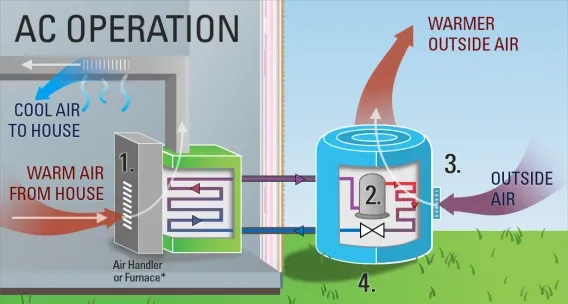
During summer operation, the indoor portion of the system acts as the evaporator. Warm indoor air passes across cold refrigerant coils, transferring heat into the refrigerant. The cooled air is then circulated back into the building.
The refrigerant carries that heat outdoors, where it passes through condenser coils and releases the heat into outside air. The cycle then repeats continuously to maintain indoor comfort.
This process functions much like a traditional air conditioner, which is why many heat pumps can fully replace conventional cooling systems. The Energy Star diagram included in the original resource demonstrates this cooling cycle visually.
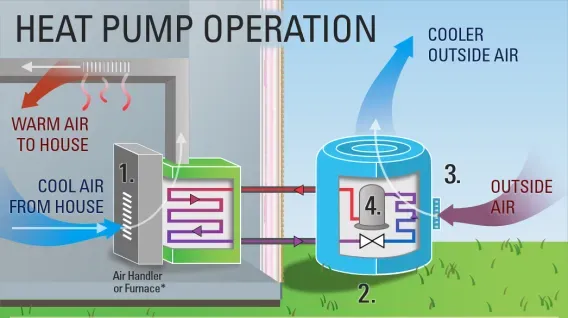
How Heating Mode Works
In winter, the cycle reverses.
The outdoor unit becomes the evaporator, extracting heat energy from outdoor air and transferring it into the refrigerant. The refrigerant is then compressed, increasing its temperature significantly before moving indoors.
Inside the building, indoor air passes across heated refrigerant coils, warming the air before it is distributed throughout the space. Once the refrigerant releases its heat, it cycles back outdoors to repeat the process.
Even in colder climates, modern cold-climate heat pumps can continue extracting usable heat from outdoor air at surprisingly low temperatures.
Ducted vs. Ductless Heat Pumps
Heat pumps can integrate into several different building systems, though the two most common configurations are ducted and ductless systems.
Ducted Systems
Ducted heat pumps integrate with existing ductwork and operate similarly to a traditional forced-air furnace system. Indoor air is distributed through supply and return ducts throughout the building.
Ductless Mini-Splits
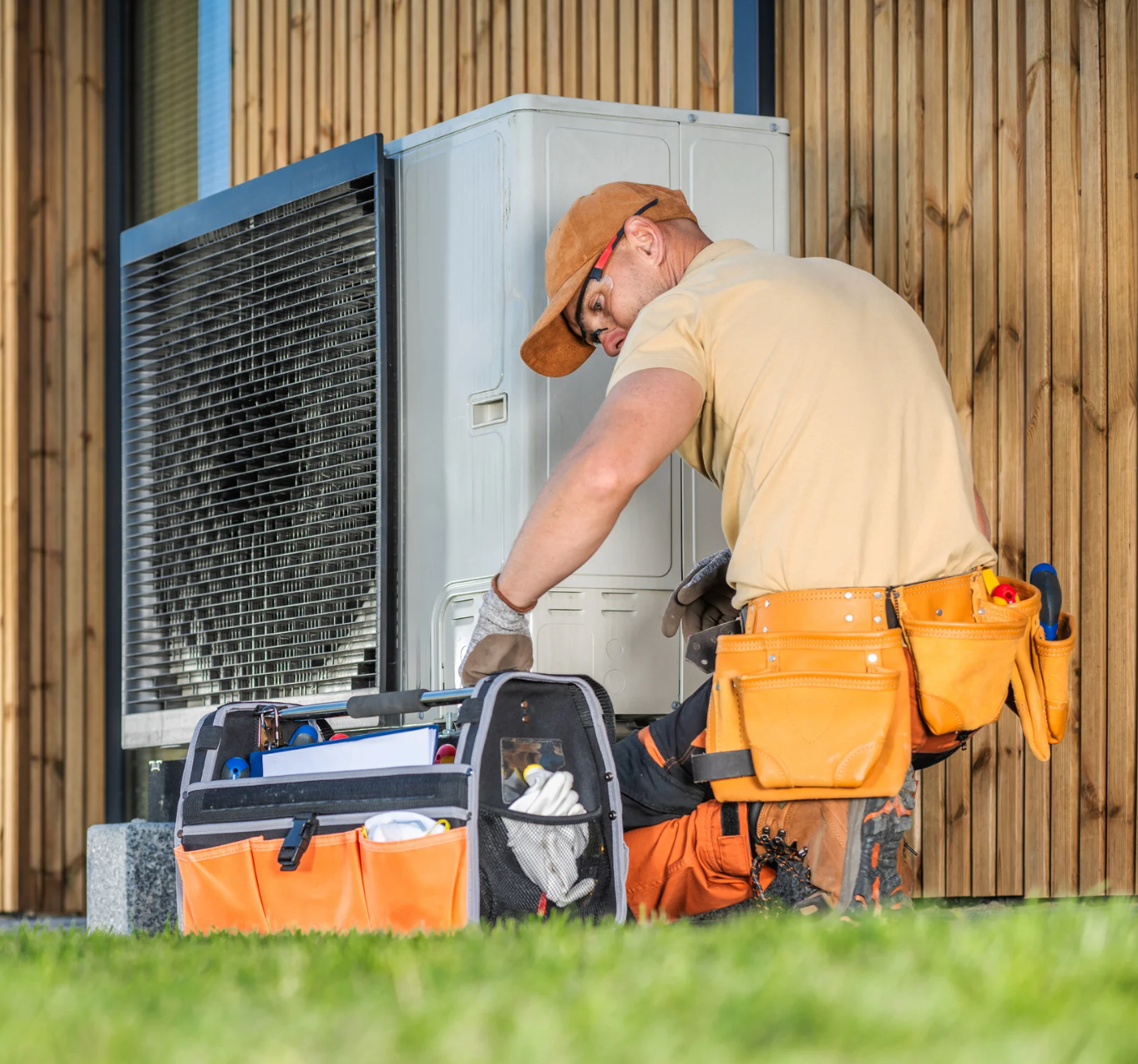
For homes without existing ductwork, ductless mini-split systems are often the ideal solution. These systems pair an outdoor unit with one or more indoor wall-mounted units that condition individual rooms or zones.
Because they allow zoned heating and cooling, ductless systems can improve comfort and reduce unnecessary energy use in unused spaces.
Why Heat Pumps Are So Efficient
One of the biggest advantages of heat pumps is efficiency.
Because a heat pump transfers heat rather than generating it through combustion, it can deliver two to three times as much heat energy as the electrical energy required to operate it.
That translates to approximately:
- 200% to 300% efficiency for heat pumps
- vs. 96% efficiency for a high-efficiency gas furnace or boiler
This improved efficiency can help reduce energy use, lower greenhouse gas emissions, and provide year-round comfort from a single system.
Is a Heat Pump Right for Your Building?
Every building is different. Factors like insulation levels, ductwork, climate, electrical capacity, and existing HVAC equipment all play a role in determining the best solution.
Whether you are replacing aging equipment, planning a remodel, or exploring ways to improve building performance, heat pumps can often provide an efficient all-electric option for both heating and cooling.
To learn more about whether a heat pump may be the right fit for your home or building, talk with a CORE Energy Concierge.